










As the days slowly grow longer and temperatures begin to rise, the season of early bloomers begins. These first plants of the year start to show their beauty even as winter comes to an end. If you plant spring flowers in time, you can bring vibrant color into your garden and help nature awaken naturally. But what kinds of spring bloomers are there, and what should you keep in mind when planting them? In this article, we answer the most important questions for starting the gardening season right.
What early bloomers are there? An Overview
Early bloomers, often simply called spring flowers, are plants that blossom at the very beginning of the year. They’re specially adapted to make the most of the short days, drawing energy from their bulbs or tubers. To help you identify them easily, we’ve put together a list of common early bloomers, complete with photos and key features—starting with the very first heralds of the year:
- Winter aconite (Eranthis hyemalis): With its bright yellow flowers, it often adds the first touches of color to the garden as early as January.
- Snowdrop (Galanthus): Typically blooms from February and is considered one of the classic signs of spring.
- Primroses (Primula): These hardy plants come in many colors and often flower in late winter or very early spring.
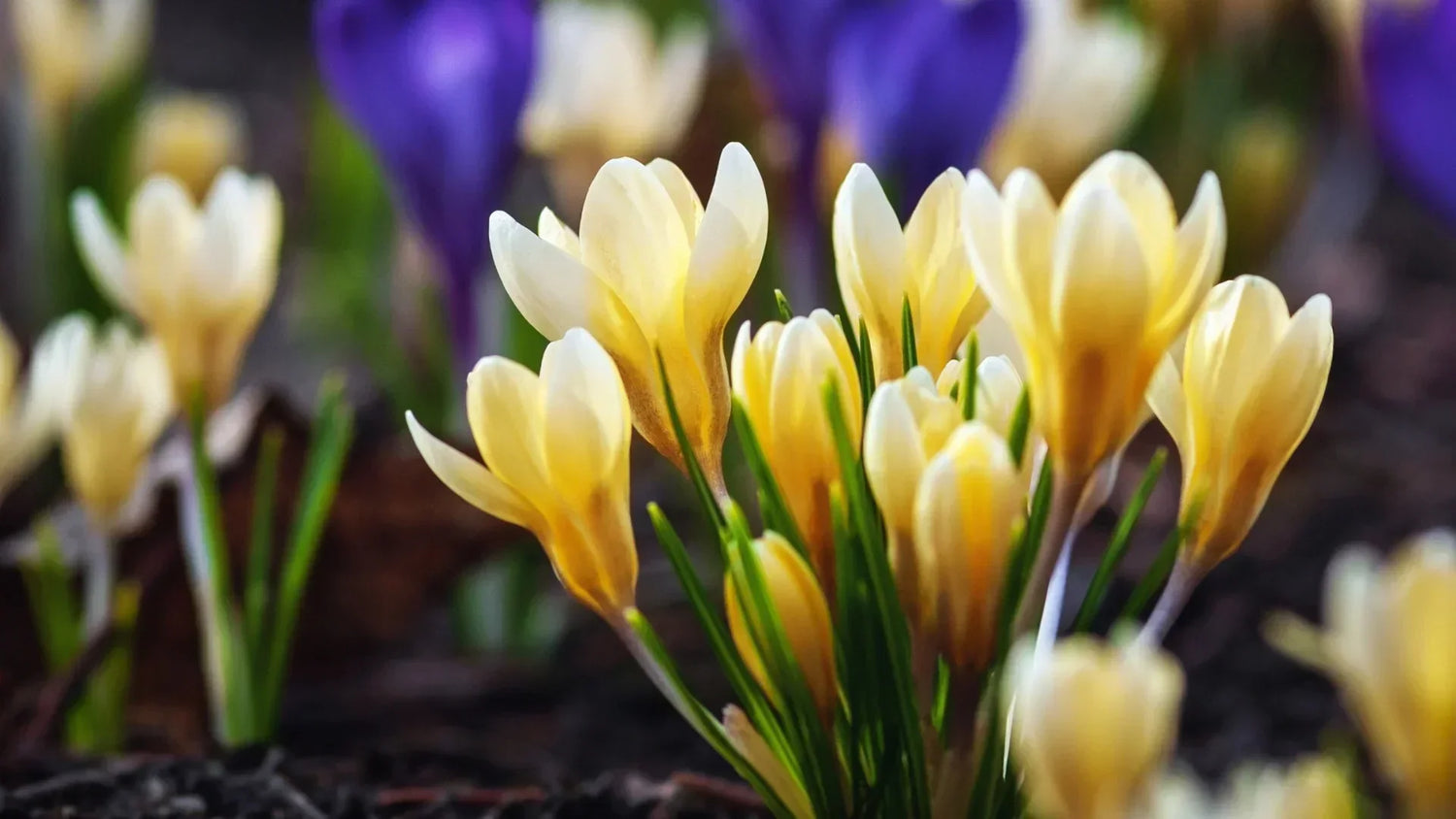
- Crocuses (Crocus): These colorful blooms appear between February and April and are particularly low-maintenance.
- Spring snowflake (Leucojum vernum): As the name suggests, these white bell-shaped flowers usually appear in March.
- Siberian squill (Scilla siberica): Its intensely blue flowers add magic to gardens starting in March.
- Daffodils (Narcissus): Also known as Easter lilies, they bloom from March to May in vibrant yellow.
- Tulips (Tulipa): Among the most popular varieties, tulips start showing off their flowers in March or April.
- Hyacinths (Hyacinthus): These fragrant plants mark the end of the early blooming season, appearing in April and May.
Many of these species spread naturally, producing new bulbs or seeds. Snowdrops, crocuses, and squills in particular can form stunning carpets of flowers over time.

How do the early bloomers differ?
Not all spring flowers are the same. They differ in three key ways:
- Blooming Time: The season is long. Some, like snowdrops and winter aconites, bloom as early as January or February. Others, such as tulips and hyacinths, flower later—from March onwards.
- Growth Type: Some plants, like crocuses, form dense clusters over time as they multiply underground. Others, like hyacinths, grow as individual, striking flower stalks.
- Location: Before planting spring flowers, it’s important to assess the site. Most varieties prefer sunny to partially shaded spots and can tolerate cooler early-season temperatures.
When to Buy Spring Bulbs
The best time to buy spring bulbs is from late summer through fall (August to November). During this period, garden centers and online retailers offer the widest selection. If you’re planning to plant in autumn, it’s wise to shop early—this way, you’ll have your pick of the most beautiful varieties for next season.
When and how do I plant early flowering bulbs?
To make sure your spring flowers bloom in full glory the next year, their bulbs must be planted on time and properly. Here’s a step-by-step guide:
- Planting Time: The ideal window is fall (September to November). Spring bulbs need to go into the ground before the first frost, as they require a cold period to develop their flowering potential.
- Location: Most species prefer well-draining, humus-rich soil. A spot with sun to partial shade is perfect.
- Planting Depth: A good rule of thumb is to plant bulbs at twice their own height. For example, snowdrops should go 5–8 cm deep, while large tulip bulbs need to be buried 10–15 cm deep.
- Spacing: Leave 5–15 cm between bulbs, depending on how big the mature plant will be.
Care Tips: Press the soil gently after planting and water during dry spells. Important: After blooming, leave the leaves in place until they wilt naturally—this allows the bulb to store energy for next year.
A Colorful Start to the Gardening Season
Early bloomers are the perfect way to welcome spring into your garden. From snowdrops and daffodils to tulips, there’s a wide variety of colorful blooms that flower at different stages of the season. If you plant your bulbs in the fall, you’ll be rewarded with a stunning floral display in the coming year. With the right timing, location, and a little care, your spring garden will delight you again and again, season after season.


